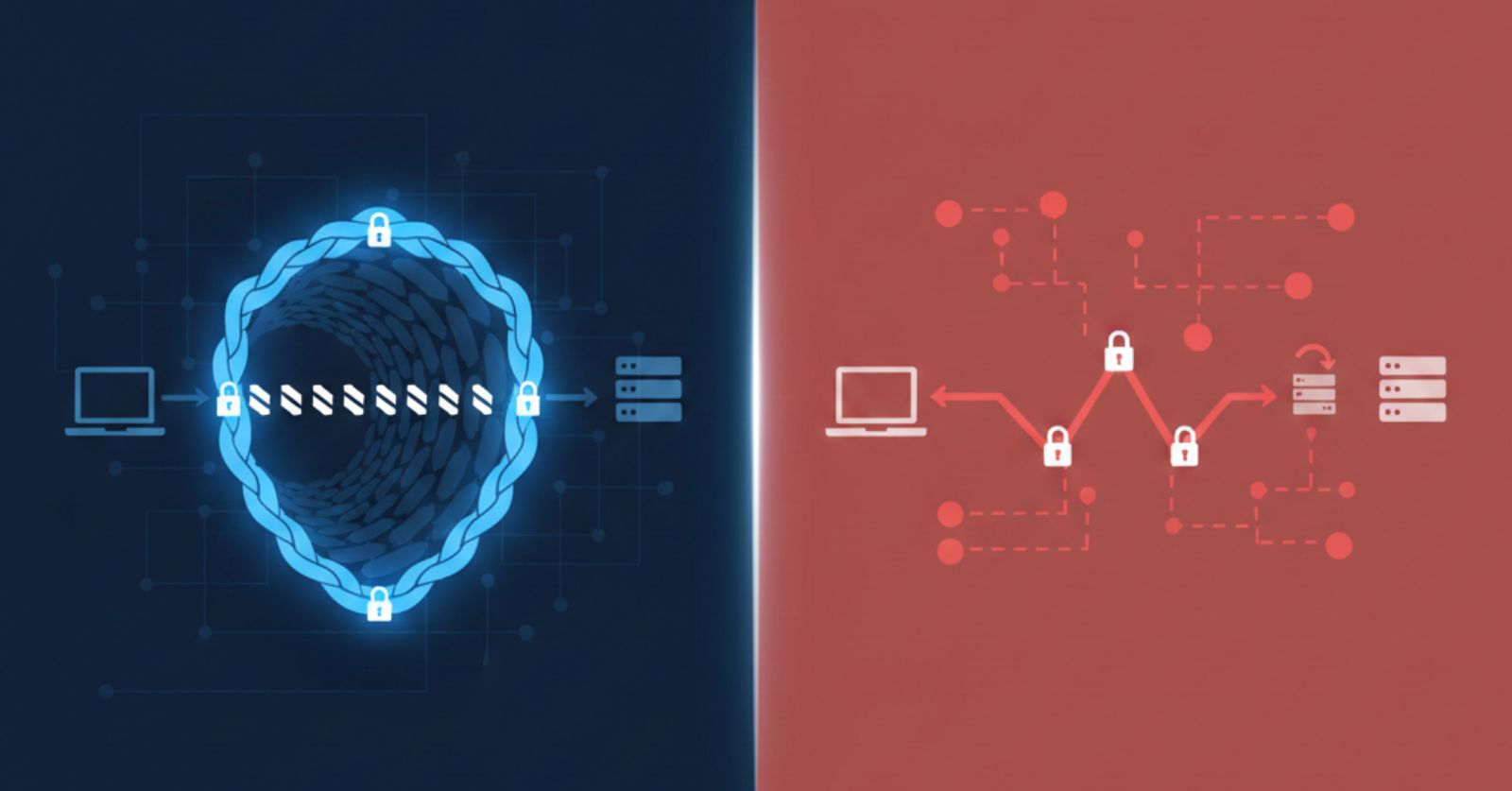
VPNs and proxy servers both function as intermediaries that route network traffic through remote servers, replacing user IP addresses with server IP addresses. However, they differ significantly in technical implementation, security capabilities, and scope of protection. VPNs create encrypted tunnels that protect all device traffic system-wide, while proxies typically operate at the application level without encryption. Understanding these differences is important for selecting appropriate tools based on security requirements, use cases, and threat models.
What Are Proxy Servers
Proxy servers are intermediary servers that receive requests from clients and forward them to destination servers on behalf of clients. When users configure applications to use proxies, network requests are sent to proxy servers rather than directly to destination servers. Proxy servers make requests to destinations using their own IP addresses, replacing the user's IP address from the perspective of destination servers. Proxies operate at the application or protocol level, meaning they must be configured per application and may only handle specific protocols. Most proxies do not encrypt traffic, leaving data visible to network operators and intermediaries. Proxies are simpler in implementation than VPNs and have lower overhead, but provide less comprehensive protection.
What Are VPNs
VPNs (Virtual Private Networks) create encrypted tunnels between user devices and VPN servers, routing all network traffic through these tunnels. Unlike proxies, VPNs operate at the operating system level, protecting all traffic from devices automatically. All data is encrypted before transmission and decrypted upon receipt, preventing observation of traffic content by internet service providers, network operators, and other intermediaries. See what is a VPN for detailed information about VPN technologies.
Technical Differences
Encryption
Encryption is a fundamental difference between VPNs and proxies. VPNs encrypt all traffic using encryption algorithms such as AES-256, ensuring that traffic content is not readable by network operators, ISPs, or other observers. Proxies typically do not provide encryption; traffic travels in plaintext and can be observed by anyone with network access, including proxy operators, ISPs, and potential attackers. Some proxy implementations support HTTPS connections, which encrypt traffic between clients and destination servers, but this does not protect traffic between clients and proxy servers or prevent proxy operators from observing unencrypted traffic.
Coverage and Scope
VPNs provide system-wide protection, automatically routing all network traffic from devices through VPN tunnels. Once a VPN connection is established, all applications and network activity are protected without requiring individual application configuration. Proxies operate at the application level and must be configured separately for each application. Only traffic from applications explicitly configured to use proxies is routed through proxy servers. Applications not configured for proxy usage send traffic directly, bypassing proxy protection. This makes proxies more selective but requires manual configuration for each application that should use proxy services.
Performance
Proxies generally have lower performance overhead than VPNs because they do not perform encryption and decryption operations. However, proxy performance depends on server capacity, network conditions, and the number of concurrent users. VPNs introduce encryption overhead that can slightly reduce connection speeds, though modern VPN protocols like WireGuard minimize this impact. VPN performance also depends on server proximity, network capacity, and protocol efficiency. In practice, the performance difference may be minimal with modern implementations, and both may experience performance impacts under heavy load or poor network conditions.
Implementation Complexity
Proxies are simpler to implement and operate than VPNs. They require less computational resources, use standard HTTP or SOCKS protocols, and do not require encryption key management or complex tunneling protocols. VPNs require more sophisticated implementations, including encryption protocols, key exchange mechanisms, tunnel management, and system-level integration. This complexity provides stronger security but also increases resource requirements and potential points of failure.
Types of Proxies
HTTP/HTTPS Proxies
HTTP proxies handle web traffic using HTTP and HTTPS protocols. They are designed for web browsing and can handle HTTP requests, responses, and web content. HTTP proxies can cache content, filter requests, and modify headers. They are commonly used for web applications and may support HTTPS connections, though the level of encryption and security depends on implementation.
SOCKS Proxies
SOCKS (Socket Secure) proxies operate at a lower level than HTTP proxies and can handle any type of network traffic, including HTTP, HTTPS, FTP, and other protocols. SOCKS proxies are more versatile than HTTP proxies and can work with applications that do not have built-in proxy support. SOCKS5, the current version, supports authentication and can handle both TCP and UDP traffic. SOCKS proxies do not typically provide encryption themselves, though they can route encrypted traffic from applications.
Transparent Proxies
Transparent proxies intercept network traffic without requiring client configuration. They operate at the network level, typically implemented by network operators or organizations. Transparent proxies do not hide the fact that proxying is occurring, as client applications are not aware of proxy usage. They are often used for content filtering, caching, or monitoring without user knowledge or consent.
Anonymous and Elite Proxies
Anonymous proxies hide user IP addresses from destination servers but may identify themselves as proxies in HTTP headers. Elite proxies (also called high-anonymity proxies) hide both user IP addresses and the fact that proxying is occurring, making proxy usage undetectable to destination servers. However, proxy operators can still observe traffic content, and these classifications primarily affect detection by destination servers rather than privacy protection.
Security Comparison
Traffic Protection
VPNs provide stronger traffic protection than proxies because they encrypt all data in transit. On public Wi-Fi networks or untrusted connections, encrypted VPN traffic cannot be intercepted or read by attackers, network operators, or other observers. Unencrypted proxy traffic can be intercepted, read, or modified by anyone with network access, including man-in-the-middle attacks. This makes VPNs more suitable for sensitive activities or untrusted networks.
ISP Observation
VPNs prevent ISPs from observing specific browsing activities because all traffic is encrypted before reaching ISPs. ISPs can see that connections are made to VPN servers but cannot determine which websites or services are accessed. Proxies do not encrypt traffic, so ISPs can observe all destination addresses, domains accessed, and connection patterns. Proxy traffic is visible to ISPs, though destination IP addresses are those of proxy servers rather than final destinations.
Proxy Operator Access
Both VPN and proxy operators can potentially observe user traffic. VPN providers decrypt traffic at VPN servers before forwarding, and proxy operators can observe all traffic passing through proxy servers. Users must trust operators not to log, misuse, or compromise traffic data. The security difference depends on operator policies, logging practices, and legal jurisdictions rather than technical capabilities alone.
Use Cases
When Proxies Are Appropriate
Proxies may be suitable for specific use cases where encryption is not required and application-level routing is sufficient. These include quick IP address changes for accessing region-restricted content, web scraping that requires rotating through multiple IP addresses, testing how websites appear from different locations, or situations where VPNs are blocked but proxies are allowed. For these uses, the lack of encryption may be acceptable, though users should be aware of security limitations.
When VPNs Are Appropriate
VPNs are more suitable when encryption and comprehensive protection are required. Use cases include protecting privacy from ISPs, securing connections on public Wi-Fi networks, conducting sensitive activities such as banking or shopping, accessing geographically restricted content with better reliability, bypassing censorship in restrictive environments, and protecting all device traffic system-wide. VPNs provide broader protection and are generally more appropriate for security-sensitive applications.
Free Proxy Risks
Free public proxies present various risks. Many do not provide encryption, making all traffic visible to proxy operators and network observers. Proxy operators can log, monitor, and potentially misuse traffic data. Some free proxies have been found to inject advertisements, malware, or malicious code into web traffic. Credential theft is possible if login information is transmitted through unencrypted proxies. Free proxies are often unreliable, with frequent downtime, slow speeds, and high user loads. Users should avoid transmitting sensitive information, passwords, or personal data through free proxies, and should be cautious about proxy operator trustworthiness.
Combining VPNs and Proxies
It is technically possible to use both VPNs and proxies, such as routing VPN traffic through proxies or using proxies for specific applications while using VPNs for system-wide protection. However, combining them can introduce complexity, potential performance impacts, and does not necessarily provide additional security benefits. For most users, a properly configured VPN provides comprehensive protection without the need for additional proxy services. Using proxies through VPNs can add latency and complexity without meaningful security improvements.
Comparison Summary
| Feature | Proxy | VPN | | :--- | :--- | :--- | | Encryption | Typically none | Full encryption | | IP Address Masking | Yes | Yes | | Traffic Coverage | Per-application (requires configuration) | System-wide (all traffic) | | Performance Overhead | Lower (no encryption) | Higher (encryption overhead) | | Traffic Visibility to ISP | Visible (unencrypted) | Encrypted (content hidden) | | Security on Public Networks | Limited (no encryption) | Strong (encrypted) | | Implementation Complexity | Simple | Complex |
Selection Considerations
When choosing between VPNs and proxies, consider security requirements, use cases, and threat models. If encryption and comprehensive traffic protection are needed, VPNs are more appropriate. If only IP address masking is required for non-sensitive activities, proxies may be sufficient. For security-sensitive applications, untrusted networks, or privacy protection from ISPs, VPNs provide stronger protection. Users should evaluate operator trustworthiness, logging policies, and technical implementations regardless of which technology is used. Free services of either type may have limitations, security risks, or business models that compromise privacy.