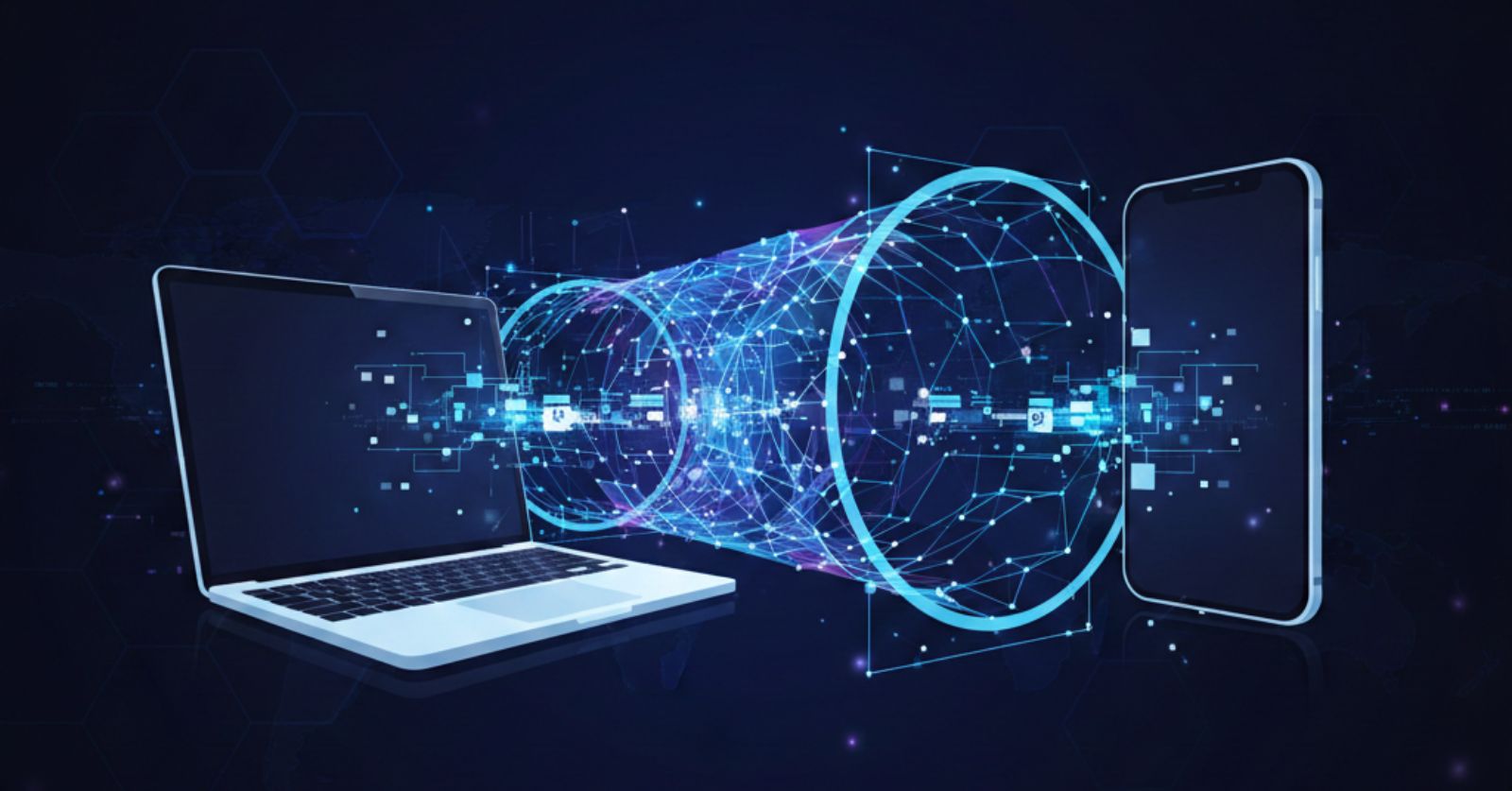
A Virtual Private Network (VPN) is a service that creates an encrypted connection between a user's device and a remote server operated by the VPN provider. All network traffic from the device is routed through this encrypted tunnel to the VPN server, which then forwards traffic to its intended destinations on the internet. VPNs replace the user's IP address with the VPN server's IP address, masking the user's network identity and geographic location from websites and services. They encrypt data in transit, preventing internet service providers, network administrators, and other observers on the local network from seeing the content of network traffic. VPNs are used for privacy protection, security on untrusted networks, accessing geographically restricted content, and bypassing network restrictions or censorship.
What Is a VPN
A Virtual Private Network (VPN) is a networking technology that establishes secure, encrypted connections between devices and remote servers. VPNs create virtual network links over existing network infrastructure, typically the public internet. The VPN connection functions as a secure tunnel through which all network traffic is routed. Data is encrypted before transmission and decrypted upon receipt, ensuring that traffic content is not observable to intermediate network operators. VPNs replace source IP addresses with VPN server IP addresses, making user network identity and location appear as that of the VPN server rather than the actual user. This provides privacy benefits, though it shifts trust from internet service providers to VPN providers, who can potentially observe traffic content.
How VPNs Work
VPN operation involves multiple technical steps. When a VPN client application establishes a connection, it authenticates with the VPN server using credentials such as usernames and passwords, certificates, or tokens. The client and server negotiate encryption parameters and establish shared encryption keys through key exchange protocols. A secure tunnel is created using VPN protocols such as OpenVPN, WireGuard, or IKEv2/IPSec, which define how data is encrypted, encapsulated, and transmitted. All network traffic from the user's device is then routed through this tunnel. Outbound data is encrypted by the VPN client before transmission, sent to the VPN server through the tunnel, decrypted at the VPN server, and then forwarded to its intended destination on the internet. Return traffic follows the reverse path: encrypted by the VPN server, transmitted through the tunnel, and decrypted by the VPN client.
VPN Architecture and Components
VPN Client
VPN clients are applications installed on user devices that establish and manage VPN connections. Clients handle authentication with VPN servers, negotiate encryption parameters, encrypt and decrypt traffic, and route network traffic through VPN tunnels. Clients may be standalone applications, browser extensions, or integrated into operating systems. They manage connection establishment, maintain tunnel integrity, handle reconnections when connections drop, and may implement features such as kill switches that block traffic if VPN connections fail.
VPN Server
VPN servers are remote systems operated by VPN providers that terminate VPN connections. Servers receive encrypted traffic from clients, decrypt it, and forward it to destination servers on the internet. Return traffic is encrypted and sent back through VPN tunnels. VPN servers have IP addresses that replace user IP addresses when connecting to websites and services. Providers operate server networks in multiple geographic locations, allowing users to appear as if connecting from different countries or regions. Server infrastructure must handle encryption/decryption overhead and routing traffic for multiple simultaneous users.
Encryption and Tunneling
VPNs use encryption to protect traffic content during transmission. Encryption algorithms such as AES (Advanced Encryption Standard) with 256-bit keys are commonly used. VPN protocols define how data is encapsulated within encrypted packets, transmitted over the network, and decrypted at endpoints. Tunneling encapsulates entire network packets within other packets, allowing protocols that would not normally traverse certain network paths to be transmitted securely. The combination of encryption and tunneling ensures that traffic content and routing information remain protected from observation.
What VPNs Protect
IP Address Masking
VPNs replace user IP addresses with VPN server IP addresses. IP addresses are network identifiers that can reveal approximate geographic locations (typically city or region level), internet service providers, and can be used to correlate activities across sessions. When using VPNs, websites and services see the VPN server's IP address instead of the user's actual IP address. Check your visibility: Use our IP Lookup Tool to see what information your IP address reveals about you right now. This masks the user's network identity and makes location-based tracking more difficult. However, IP address masking alone does not provide complete anonymity, as other tracking methods such as cookies, browser fingerprinting, and account logins can still identify users.
Traffic Encryption
VPNs encrypt all network traffic between user devices and VPN servers. This prevents internet service providers from observing the content of user traffic, including websites visited, data transmitted, and application usage. Network administrators on local networks (such as public Wi-Fi operators) cannot intercept or read encrypted traffic content. Encryption protects data in transit but does not protect against threats that occur after traffic is decrypted at VPN servers or destination servers. The level of protection depends on the encryption algorithms and protocols used, with stronger encryption providing better security.
Browsing Activity from ISPs
Without VPNs, internet service providers can observe user network traffic, including destination IP addresses, domain names accessed, connection timestamps, and data volumes. In some jurisdictions, ISPs are legally permitted or required to collect, retain, and share this data. With VPNs, ISPs only see encrypted traffic destined for VPN server IP addresses, preventing observation of specific browsing activities. However, ISPs can still observe connection patterns, timing, and data volumes, which may reveal some information about usage.
VPN Limitations
VPNs have various limitations and do not provide complete anonymity or security. VPN providers can observe user traffic content because data is decrypted at VPN servers before forwarding. Users must trust VPN providers not to log, store, or misuse traffic data. Some VPNs have been found to log user data despite claims to the contrary, or have been compromised by security vulnerabilities. VPNs do not protect against tracking by websites through cookies, browser fingerprinting, or account logins. They do not prevent malware infections, phishing attacks, or other security threats. VPNs can be blocked or detected by some websites and services. Connection speeds may be reduced due to encryption overhead and server distance. Some VPN implementations have security flaws or use weak encryption.
VPN Use Cases
Privacy Protection
VPNs are used to protect privacy from internet service providers, network operators, and other observers. They prevent ISPs from observing specific browsing activities and protect data transmission on untrusted networks. However, privacy protection depends on VPN provider policies and practices, as providers can potentially observe all user traffic.
Security on Public Networks
Public Wi-Fi networks in locations such as cafes, airports, hotels, and libraries may be insecure or malicious. VPNs encrypt traffic on these networks, protecting against interception and man-in-the-middle attacks. However, VPNs do not protect against all threats on public networks, such as malicious websites or unencrypted application data.
Geographic Content Access
Some online services restrict content based on geographic location. VPNs can make users appear to connect from different countries, potentially allowing access to geographically restricted content. However, many services actively detect and block VPN traffic, and using VPNs to bypass geographic restrictions may violate terms of service.
Bypassing Network Restrictions
VPNs can bypass network-level restrictions and censorship by routing traffic through VPN servers that are not subject to local restrictions. This enables access to blocked websites and services in restrictive environments. However, some jurisdictions block or restrict VPN usage, and VPNs may be detected and blocked by network operators.
VPN Protocols
WireGuard
WireGuard is a modern VPN protocol designed for simplicity, performance, and security. It uses state-of-the-art cryptography including ChaCha20 for encryption, Poly1305 for authentication, Curve25519 for key exchange, and BLAKE2 for hashing. WireGuard has a smaller codebase than older protocols, making security audits more feasible. It provides high performance with minimal overhead, often achieving speeds close to non-VPN connections. WireGuard is increasingly adopted by VPN providers and is considered a strong choice for VPN implementations.
OpenVPN
OpenVPN is an open-source VPN protocol that has been widely used and audited over many years. It supports multiple encryption algorithms and can operate over TCP or UDP. OpenVPN is highly configurable and can be adapted for various network environments. It has a proven security track record and is supported by most VPN providers. OpenVPN can be more resource-intensive than newer protocols and may have slightly lower performance.
IKEv2/IPSec
IKEv2 (Internet Key Exchange version 2) with IPsec is a VPN protocol that is well-suited for mobile devices. It handles network changes (such as switching between Wi-Fi and cellular) efficiently by quickly re-establishing connections. IKEv2/IPSec is natively supported on many operating systems and provides good security. It is commonly used for mobile VPN implementations where connection stability is important.
PPTP
PPTP (Point-to-Point Tunneling Protocol) is an older VPN protocol that is now considered insecure. It uses weak encryption that can be easily compromised. PPTP should not be used for security-sensitive applications, as it provides minimal protection and is vulnerable to various attacks. Modern VPN implementations avoid PPTP in favor of more secure protocols.
Free vs. Paid VPNs
Free VPN Considerations
Free VPN services may have limitations or business models that affect privacy and security. Some free VPNs generate revenue by selling user data, displaying advertisements, or using user devices as network nodes. Free VPNs often have bandwidth limitations, speed restrictions, or limited server locations. Some free VPN applications have been found to contain malware or security vulnerabilities. Users should carefully evaluate free VPN providers and understand their business models and data handling practices. Free VPNs may not provide the same level of privacy protection as reputable paid services.
Paid VPN Services
Paid VPN services typically generate revenue through subscription fees, allowing them to operate without selling user data or displaying advertisements. Paid services often provide unlimited bandwidth, faster speeds, larger server networks, and additional features such as kill switches, split tunneling, and multi-hop connections. They may undergo independent security audits and implement stronger privacy protections. However, paid status does not guarantee quality or trustworthiness, and users should evaluate providers based on their specific policies, practices, and technical implementations.
VPN Features
Kill Switch
A kill switch is a feature that automatically blocks internet traffic if the VPN connection drops or fails. This prevents accidental exposure of real IP addresses and unencrypted traffic when VPN connections are interrupted. Kill switches monitor VPN connection status and can block all network traffic or specific applications when VPN connections are not active. See VPN kill switch for detailed information.
No-Logs Policy
A no-logs policy means that VPN providers do not record, store, or retain information about user activities, connections, or traffic. This is important for privacy because logged data could be accessed by providers, subpoenaed by authorities, or compromised in security incidents. However, not all no-logs policies are equal: some may log minimal connection metadata, and policy compliance can be difficult to verify independently. See no-logs policy for detailed information.
DNS Leak Protection
DNS leak protection ensures that DNS queries are routed through VPN tunnels rather than using default DNS servers provided by ISPs. Without DNS leak protection, DNS queries may bypass VPN tunnels, revealing which domains users are accessing even though web traffic is encrypted. DNS leak protection routes all DNS queries through VPN servers, preventing DNS-based tracking and ensuring consistent privacy protection.
Split Tunneling
Split tunneling allows users to route some traffic through VPN connections while other traffic uses direct internet connections. This enables selective VPN usage: applications that need VPN protection can use VPN tunnels, while applications that need direct connections or faster speeds can bypass VPNs. Split tunneling provides flexibility but requires careful configuration to ensure appropriate traffic is protected.
VPN Selection Considerations
When evaluating VPN services, consider these factors:
- Privacy Policy: Review logging policies, data handling practices, and jurisdictional considerations that affect data retention and legal requirements
- Security: Evaluate encryption implementations, protocols used, security audits, and vulnerability management practices
- Performance: Consider connection speeds, server locations, latency, and bandwidth limitations
- Features: Assess available features such as kill switches, DNS leak protection, split tunneling, and multi-hop connections
- Jurisdiction: Consider the legal jurisdiction of VPN providers, as different jurisdictions have different data retention requirements and legal frameworks
- Transparency: Look for providers that undergo independent security audits, publish transparency reports, and provide detailed information about their operations
- Platform Support: Ensure compatibility with operating systems and devices you use
- Cost: Evaluate pricing relative to features, performance, and privacy protections provided
Common Misconceptions
VPNs do not provide complete anonymity. While they mask IP addresses and encrypt traffic, websites can still track users through cookies, browser fingerprinting, and account logins. VPN providers can observe traffic content, requiring trust in provider policies and practices. VPNs do not make users invisible or completely anonymous online. For stronger anonymity, see how to stay anonymous online.
VPNs do not always significantly slow internet connections. Modern VPN protocols like WireGuard have minimal performance overhead, and VPNs may even improve speeds in some cases by avoiding ISP throttling. Performance depends on server proximity, network capacity, encryption overhead, and protocol efficiency.
Not all VPNs are equivalent. VPN services vary significantly in privacy policies, security implementations, performance, and trustworthiness. Some VPNs have been found to log user data, have security vulnerabilities, or engage in practices that compromise user privacy. Careful evaluation is necessary when selecting VPN services.